What are partial discharges?
Partial discharges (PD) are localised electrical discharges that do not completely bridge the insulation between conductors. They can develop at weak points in insulation, around sharp edges of conductive components, in air voids, on contaminated surfaces or as materials age.
One common type is corona discharge, which occurs in a strong electric field around high-voltage conductors.
Although the phenomenon may initially appear minor, continued partial-discharge activity can contribute to:
- insulation degradation,
- increased energy losses,
- a greater risk of breakdown,
- equipment failure,
- fire risk.
Recent case: identifying a corona-discharge pattern
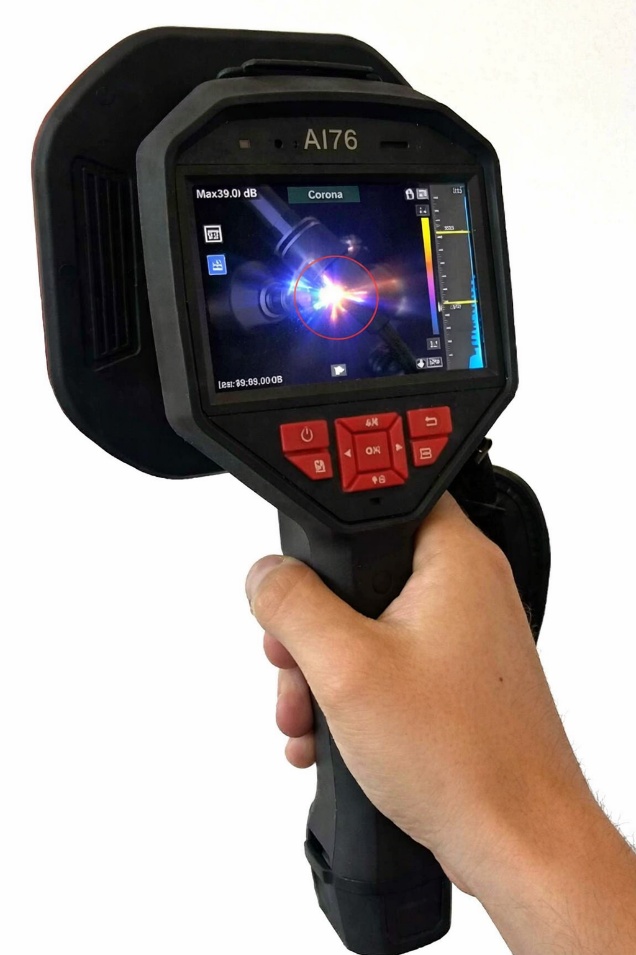
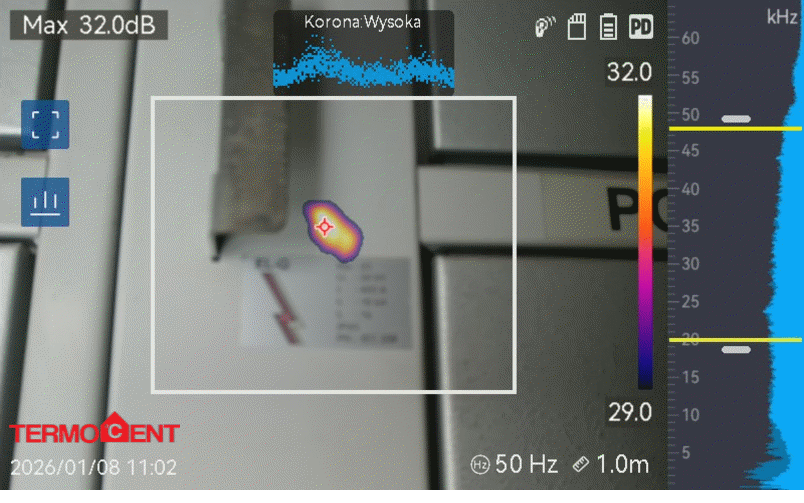
During a recent measurement with a HIKMICRO AI76 acoustic imaging camera, the instrument classified the recorded partial-discharge pattern as corona (`Corona 100%`). The source was observed indirectly by analysing waves reflected from the ceiling above the equipment.
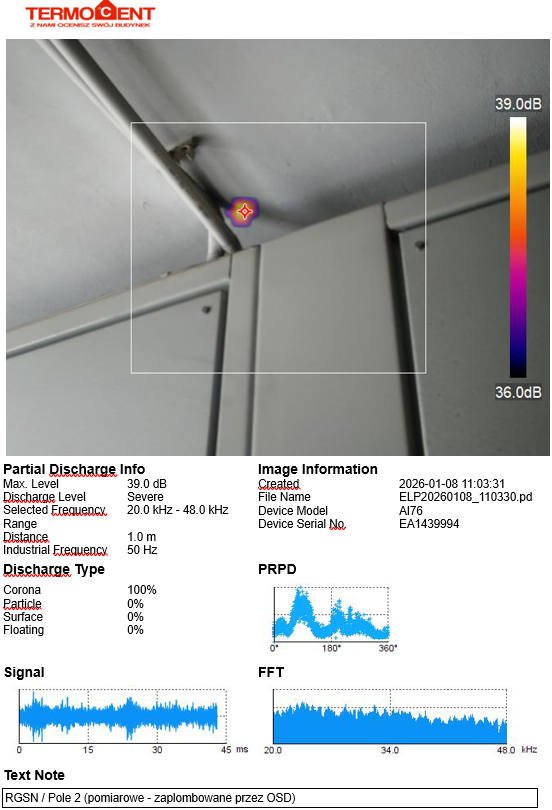
The measurement report recorded:
- maximum level: 39.0 dB,
- classification: Severe,
- frequency range: 20–48 kHz,
- measurement distance: 1.0 m,
- instrument model: AI76,
- discharge type returned by the instrument: Corona — 100%.
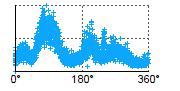
The chart shows the distribution of discharge activity against the phase angle of the 50 Hz voltage waveform (0°–360°).
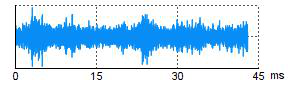
The chart shows the ultrasonic signal amplitude over time (0–45 ms).
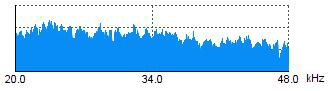
The chart shows the distribution of signal energy within the 20–48 kHz band.
The instrument’s PRPD analysis classified the recorded pattern as corona rather than a surface, floating or particle discharge. This classification forms part of the measurement evidence and must be interpreted together with the equipment, operating conditions and inspection context.
The measurement was carried out without opening or interfering with the installation because the component had been sealed by the distribution system operator. The survey was non-invasive and used waves reflected from the ceiling above the affected equipment.
How does an acoustic camera detect partial discharges?
Partial discharges can emit ultrasonic waves outside the range of human hearing. An acoustic imaging camera:
- uses an array of MEMS microphones — 136 in the AI76,
- processes the signal in real time,
- overlays an acoustic map on the visible image,
- supports discharge-pattern analysis and classification.
Unlike a point ultrasonic detector, the camera can visualise the direction of an acoustic source across the scene. In suitable circumstances it can be used while the installation remains in operation, avoiding intrusive access to the inspected component. The safe method and operating state must always be agreed for the particular installation.
Why does this matter?
In this case, the instrument assigned the recorded event the `Severe` classification. This prompted consideration of:
- accelerated insulation degradation,
- an increased risk of failure,
- possible progression towards arcing,
- potential production downtime.
For an industrial facility, an unresolved defect can have consequences including:
- costly downtime,
- damage to transformers or switchgear,
- disruption to the electricity supply.
The classification is not a diagnosis on its own. It helps prioritise further technical assessment and the appropriate response.
TERMOCENT’s diagnostic capabilities
Ultrasonic imaging enables us to:
- locate an acoustic emission source where access and conditions permit,
- document the instrument’s severity indication,
- record the discharge-pattern classification,
- compare measurements over time where the inspection method and conditions are repeatable.
This provides additional evidence for assessing the technical condition of electrical equipment.
When should a partial-discharge inspection be considered?
Acoustic partial-discharge inspections can be considered for:
- high- and medium-voltage switchgear,
- transformer stations,
- cable and overhead lines,
- metering and protection bays,
- installations operating in elevated humidity or dusty conditions,
- industrial facilities where continuity of production is critical.
Potential benefits of acoustic partial-discharge diagnostics include:
✔ non-invasive data acquisition in suitable conditions
✔ inspection without a shutdown where the safe procedure permits it
✔ efficient localisation of an acoustic source
✔ instrument-supported classification of discharge patterns
✔ documented measurement results
✔ earlier identification of conditions requiring further assessment
TERMOCENT: technical diagnostics for electrical installations
Acoustic-camera partial-discharge detection extends our non-invasive diagnostic capabilities for electrical installations in industry and buildings.
Contact us if you need to:
- assess the condition of switchgear,
- inspect a transformer station,
- investigate a suspected partial-discharge source,
- obtain a report documenting the measurement and classification.
Call +48 530 105 398 or email biuro@termocent.pl