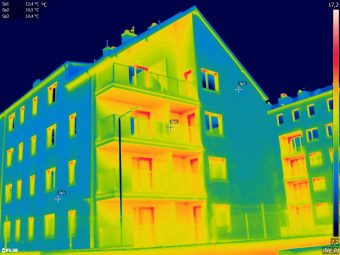
Thermal imaging can help locate areas where heat is escaping from a building. The usefulness of the thermograms, however, depends on the conditions during the survey and on how the building has been prepared. Stable indoor conditions, the weather and recent exposure to sunlight all affect the interpretation. This guide explains what to check before a thermal imaging survey and which details should be agreed with the specialist.
Weather and timing: when to arrange a thermal imaging survey
Favourable conditions for a thermal imaging survey often occur during the heating season, when a sustained temperature difference can be maintained between the inside of the building and the outdoor environment. The exact conditions depend on the building, the part being examined and the purpose of the survey.
External elevations should not be measured immediately after exposure to direct sunlight. Solar radiation can alter surface temperatures and make thermograms more difficult to interpret. Surveys are therefore often carried out after sunset, early in the morning or under stable overcast conditions. Cloud cover can also reduce radiative cooling towards a clear sky, which may otherwise affect building-surface temperatures.
The surfaces being examined should not be covered with snow. Rain and fog can also interfere with infrared measurements. The weather forecast should therefore be checked before the visit, and the final timing confirmed from the short-term conditions.
Indoor conditions before a thermal imaging survey
A stable and sufficient temperature difference between the interior and the outdoor environment is an important measurement condition. The required difference is not identical for every survey: it depends on the building envelope, the measurement method and the question the inspection is intended to answer. TERMOCENT confirms the required conditions for the agreed scope before the visit.
Temperature difference alone is not enough. Walls and other building elements store heat and respond gradually to changes in their surroundings. Indoor temperature and heating settings should therefore remain as stable as possible for the period agreed with the specialist, particularly in buildings with a heavy masonry structure.
TERMOCENT carries out building energy audits as well as thermal imaging surveys. Before a thermal imaging visit, keep the heating at its usual setting unless the specialist gives different instructions. Avoid last-minute changes intended to warm the building quickly. Stable conditions make it easier to distinguish relevant thermal patterns from short-term temperature effects.
Practical preparation checklist
The detailed instructions depend on the property and the survey scope. Unless the specialist advises otherwise:
- Close external doors and windows before the measurements.
- Avoid airing the rooms immediately before the survey and follow the agreed preparation time.
- Open curtains, blinds and internal shutters so that air can circulate near the glazing.
- Keep thermostatic radiator settings stable rather than changing them shortly before the visit.
- Provide unobstructed access to wall corners, window areas and door openings included in the inspection.
Preparation does not guarantee that every defect will be visible. It gives the specialist more consistent conditions in which to assess the measured temperature patterns. TERMOCENT agrees the instructions with the client before the inspection so that they match the building and the planned scope.
Speak to a specialist: +48 530 105 398
or email biuro@termocent.pl