Does the thermometer show an apparently comfortable temperature while the room still feels cold or stuffy? This may mean that thermal comfort has not been achieved. Thermal comfort describes a condition in which a person feels neither excessively warm nor uncomfortably cold. Understanding what affects it can help improve indoor conditions and support more informed decisions about heating, cooling and the building envelope.
What is thermal comfort?
In simple terms, thermal comfort is a state of thermal balance. From a physiological perspective, this means that the heat generated by the body through metabolism is balanced by the heat exchanged with the surrounding environment. Whether a person feels comfortable still depends on several environmental and individual factors.
Thermal comfort and humidity
There is no single temperature that guarantees comfort for everyone. The amount of water vapour in the air is one of the factors that influences how a room feels, partly because it affects the body’s ability to lose heat through the evaporation of perspiration.
At high humidity, even a moderate temperature may feel uncomfortable because perspiration evaporates less readily. Very dry air can irritate the skin and mucous membranes and can also affect how cool the environment feels. A relative humidity range of 40–60% at an air temperature of around 20°C is often used as a practical indoor reference, although the appropriate range depends on the building, its use and the applicable guidance.
What affects thermal comfort?
A number of factors determine whether a particular person feels comfortable, too warm or too cold in a room:
- Air temperature. This is the most obvious parameter. In a home it should be reasonably stable and suited to the room’s purpose, with bedrooms generally kept cooler than bathrooms.
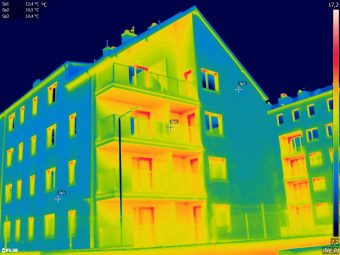
- The condition of walls, windows and other building elements. Even when the air is warm, cold surrounding surfaces can make the room feel uncomfortable. An energy assessment can help establish whether the building envelope requires closer investigation.
- Air humidity. The amount of water vapour in the air affects the body’s perception of temperature.
- Air movement. Draughts or excessive mechanical ventilation can cool parts of the body and create local discomfort.
- Physical activity. The more active we are, the more heat the body produces and the lower the surrounding temperature may need to be.
- Clothing insulation. Clothing directly affects heat exchange between the skin and the environment.
- Individual condition. Fatigue, hunger, health conditions and medication can all affect how a person perceives temperature.
How is thermal comfort assessed?
PN-EN ISO 7730 is one of the standards used to assess thermal environments in occupied buildings. Two commonly used indicators are:
- PMV (Predicted Mean Vote). A predicted average thermal-sensation rating on a seven-point scale, from −3 (cold) to +3 (hot). A value close to 0 represents a thermally neutral response.
- PPD (Predicted Percentage of Dissatisfied). An estimate of the percentage of people likely to be dissatisfied with the thermal conditions. The model recognises that individual responses vary even when the average result is close to neutral.
How can thermal comfort be improved?
The first step is to understand the building and the source of the discomfort. Depending on the situation, it may be useful to assess the airtightness and insulation of the building envelope. TERMOCENT offers building energy audits, thermal imaging surveys and building airtightness tests.
Effective ventilation, including a correctly designed and balanced heat-recovery ventilation system, can also help maintain indoor air quality while limiting unnecessary heat loss. Heating and cooling controls may help stabilise indoor conditions by responding to occupancy, weather and solar gains. The appropriate solution depends on the building and on what the measurements show.
Speak to a specialist: +48 530 105 398
or email biuro@termocent.pl